






















Reeves’ Big Budget Sparks Fear and Skepticism
Chancellor Rachel Reeves prepares for a crucial budget amid deep party concerns, economic pressures, and political tension.

One senior MP's count, the government had already presented 13—yes, thirteen—different tax proposals before the final decisions were made public.
Or because the ever-increasing number of reports from different think tanks and research groups have offered helpful suggestions that have grabbed headlines.
But the budget process itself has been ongoing for months.
In July, Chancellor Rachel Reeves held her first meeting with her colleagues in her Treasury office to begin planning.
"Everyone was preparing to open Excel," one colleague recalls, "but Reeves said she didn't want any spreadsheets or Treasury scorecards.
Instead, she wanted to start by working out how to accomplish her top three priorities, which she had written on an A5 Treasury-headed sheet of paper.
Next week, she will focus on three things: reducing the cost of living, reducing NHS waiting lists, and reducing the national debt.
The messages to the voting public—and each message carries a hidden message for the powerful financial markets—are: control inflation, continue spending more on public services, conserve long-term cash for things like infrastructure, and try to control spending to tackle the country's massive debt pile.
Reeves' team is confident the Chancellor will be able to deliver on all three things on Wednesday.
But there is deep fear within her party, and her opponents and businesses suspect that Reeves's second budget will instead be stalled by political obstruction and confusion.
Reeves herself will undoubtedly mention the restrictions imposed on her as Chancellor even before she entered No. 11.
Large debts. High taxes. Years of underspending in some areas, leaving parts of public services redundant. Debate about the past may be weakened.
A senior Labour Party leader told me, "Everyone recognizes that we inherited a bad situation, but it's right that people expect things to improve."
Some constraints on Reeves's choices are more stringent because of the Labour Party.
The election manifesto promised to avoid raising three major taxes—income tax, national insurance, and VAT—to reduce the number of high-earners contributing to the Treasury's coffers.
Then, in most government circles, the government's initial negative messages are now recognized as having a real-world impact: things will get worse before they get better.
In last year's budget, Reeves left himself only £9 billion of "headroom"—in other words, little cash to support the government if conditions turned out to be more difficult than expected, which indeed has happened.
A former Treasury minister, Lord Bridges, told the Lords: "This isn't a fiscal buffer; it's a fiscal wafer, so thin and fragile that it will break with the slightest thump."
Well, it's been broken by official number-crunchers, the Office for Budget Responsibility, calculating that the economy is performing less well than previously thought, leaving the Chancellor short on cash.
You can read more about what this means here.
The country's already high debt means markets don't want it to borrow more.
But perhaps most importantly, the limits on cuts, spending, or borrowing for Reeves stem from the biggest political factor right now: this government isn't popular with its own backbenchers, and it doesn't always feel like the leadership is in charge.
Downing Street has already shown it's willing to abandon plans that could save a lot of money if ordinary people act with a firm hand.
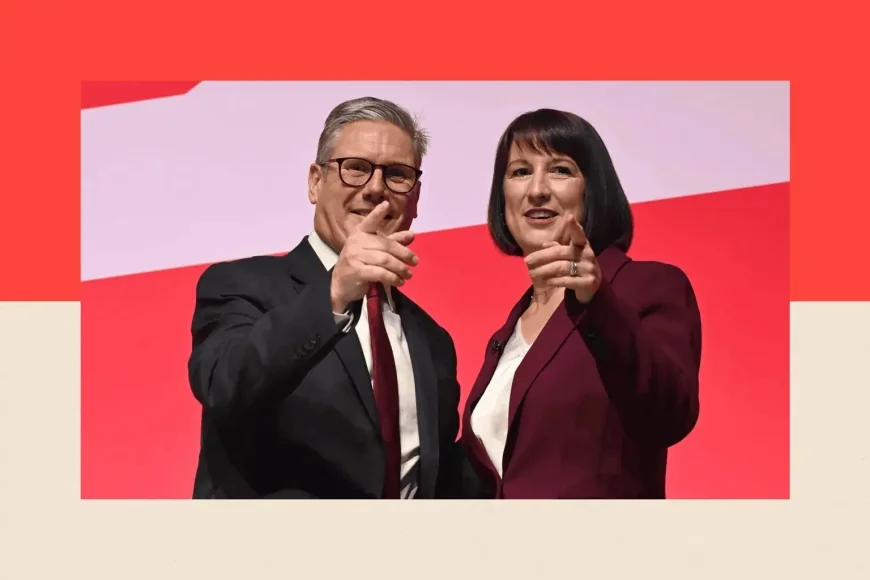
Prime Minister Sir Keir Starmer and Reeves were forced to abandon the winter fuel allowance in 2024 and welfare cuts earlier this year. And it's also expected that extra cash is on the way.
A senior MP told me: "They need to increase headroom, do something big on energy costs, and they need to do something for the soft left on the [two-child] cap – they've hit people hard."
It will be expensive, but Labour MPs hope that at least some limits on benefits for larger families will be lifted, and help with energy bills will be provided.
This is very, very frustrating for some members of the government. One told me that Labour backbenchers "want everything for free – we should have adults driving the cars, not children in the back."
On Friday, as Reeves received the final numbers for his big budget moment, several sources pointed to other government decisions that make his job more difficult – areas where Labour has appeared to contradict or confuse – and even undermine – its own ambitions.
On occasion, the Chancellor, with the Prime Minister's support, will say that growing the economy and helping businesses is his top priority.
But his initial decision to increase National Insurance, making it more expensive for companies to hire additional staff, was seen as completely counterproductive by many firms, and many report that high staff costs make it very difficult to grow their businesses.
Ministers may have talked about their hope to reduce regulation: with over 80 different regulators making rules, you can understand why.
Nevertheless, vital new protections for workers are being introduced, which means more regulations.
Labour has said they will provide political stability after years of Tory turmoil. We're not in a zone where the party is rapidly rotating through Prime Ministers, at least not yet.
But the constant reorganization in Number 10, very public questions about Sir Keir's leadership, and intense speculation about upcoming budget decisions don't align with Sir Keir's stated aim of ending the drama.
There are some key takeaways. The last time Transport Secretary Heidi Alexander appeared on the program, she promised more help to consumers buying electric cars, making them cheaper.
But as Alexander prepares to return to the studio, the Chancellor is rumored to be adding a new pay-per-mile charge for electric vehicles, making them more difficult to afford.
Late Friday night, discussions were underway in Whitehall over whether to make taxes on oil and gas companies less stringent, with some ministers arguing for a softer tax to prevent companies from exiting the North Sea and shifting their future investments in renewable energy elsewhere.
The upside is that the Labour Party promises to save bills and create thousands of jobs if energy companies rapidly transition to green power.
But the tax, which they increased last year, could drive away some of those same companies, and with it the promise of future growth. No government's policies are completely pure everywhere.
In an organization that spends over a trillion pounds annually and makes thousands of decisions every week, it's foolish to think they can all be perfectly aligned with a single, overarching goal.
But even from Sir Keir, as we've discussed many times, a common complaint about this government is that there's no clear understanding of its overall purpose.
One exasperated senior recently told me that sometimes he wonders: "What are we all really doing here?"
Market pressures mean it's difficult for the Chancellor to borrow any more. Labour's backbenchers will be allergic to any major spending cuts. And a public uneasy with an unpopular government is loath to see large tax increases.
The realities of politics can often make it difficult for governments to make smart economic decisions. The realities of the economy can often make it difficult for governments to make the best political decisions.
On Wednesday, Reeves will have to confidently combine the two, with decisions that will determine the future of this troubled government.
What's Your Reaction?
 Like
0
Like
0
 Dislike
0
Dislike
0
 Love
0
Love
0
 Funny
0
Funny
0
 Angry
0
Angry
0
 Sad
0
Sad
0
 Wow
0
Wow
0