































Already Shaky Job Market Weakened Further in October and November
Eight people were killed after US military strikes on alleged drug boats, raising fears of extrajudicial killings amid Trump’s drug war escalation.

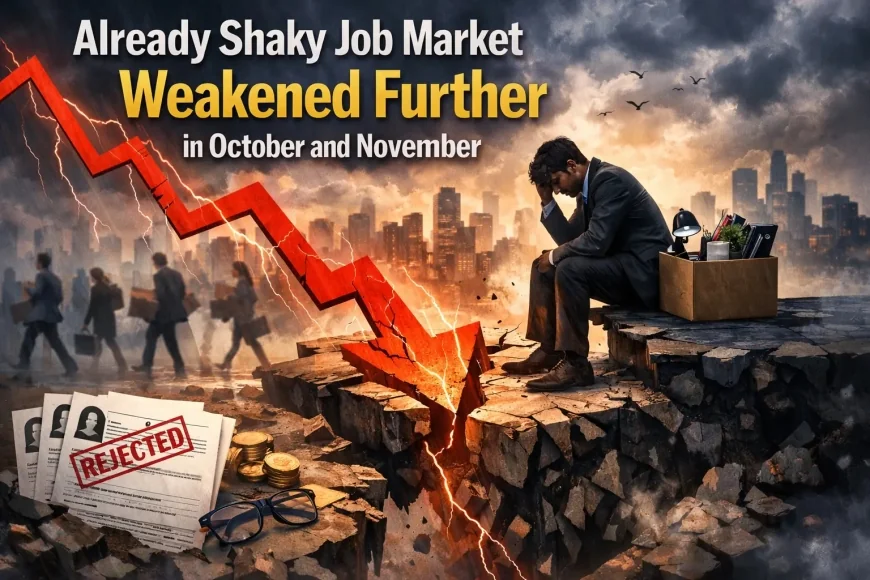
The Bureau of Labor Statistics said on Tuesday that the United States lost 105,000 jobs in October and added 64,000 in November, lifting a months-long haze over the labor market.
The unemployment rate rose to 4.6% in November.
The national employment situation already appeared fragile before Tuesday's report. The June and August job reports showed a net decrease in jobs, the first time since 2020 that jobs had declined in the two months before November.
The September report, the last before the government shutdown, showed a slight increase of 119,000 jobs and little change in the unemployment rate (4.4%).
Preliminary payroll data for the most recent two months was also revised downward on Tuesday. "Total employment in August and September is 33,000 lower than previously reported," the BLS wrote in a news release.
Economists generally expected a net decrease in total jobs in October, followed by a slight recovery and increase in November.
The BLS said federal government employment "fell sharply by 162,000 in October as some federal employees who accepted deferred resignation offers were removed from federal payrolls."
This program was run under Elon Musk's now-defunct Department of Government Efficiency.
Since the beginning of the year, the number of federal government jobs has declined by 271,000.
Wage growth also appeared to slow this fall. In November, average hourly earnings increased by just 0.1%. Over the past year, average earnings have increased by 3.5%. But this is only half a percentage point higher than the most recent inflation reading in September, meaning wage increases have had little impact on consumer purchasing power.
On Thursday, the BLS will release inflation data that was delayed due to the shutdown.
During the 43-day shutdown, which ended on November 12th, BLS staff were unable to collect some key data, so the report released on Tuesday does not include the unemployment rate or labor force participation rate for October, and some demographic details for the month will remain unknown.
Software Services
 |
All-in-one casino solution ready to launch — talk to our experts now |
Not everything was bad news, except for federal employees. In November, the health care sector added 46,000 new jobs, and construction payrolls increased by 28,000.
The BLS specifically noted that 19,000 of these building jobs were for "non-residential specialty trade contractors," which could refer to AI data centers.
However, job losses increased in the transportation and warehousing sectors, with more than 18,000 workers classified as couriers or messengers losing their jobs.
The leisure and hospitality industry lost 12,000 jobs in November, which could be another warning sign for the economy.
ADP Chief Economist Nela Richardson warned in early November that the slowdown in the industry was her "most worrying trend." She said, "This directly impacts the consumer and how healthy and robust the consumer market will be."
Other industries, including manufacturing, retail trade, information, and the financial sector, showed few signs of growth.
Stock futures remained unchanged after the data was released. Federal Reserve Chairman Jerome Powell had downplayed the significance of this delayed data point last week, calling it potentially "inaccurate."
Thank you for reading this content.
What's Your Reaction?
 Like
0
Like
0
 Dislike
0
Dislike
0
 Love
0
Love
0
 Funny
0
Funny
0
 Angry
0
Angry
0
 Sad
0
Sad
0
 Wow
0
Wow
0