


























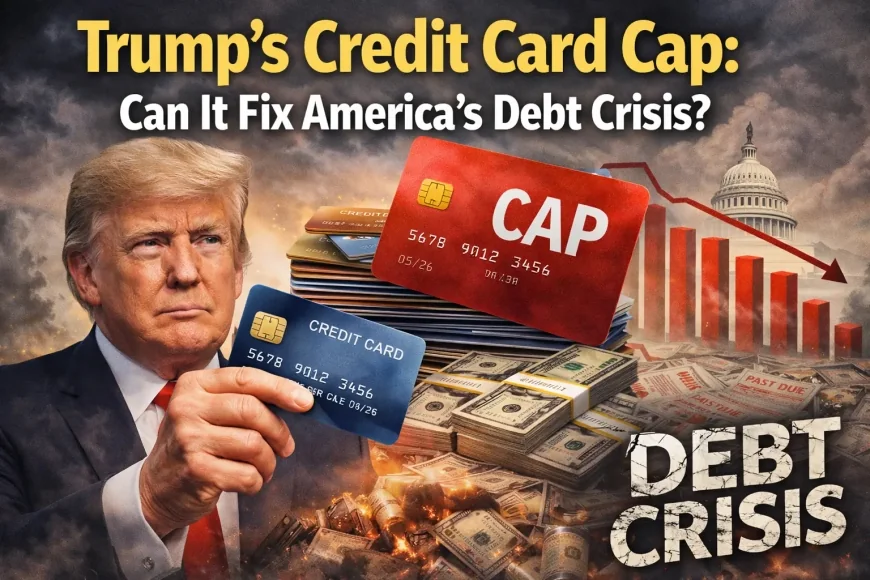
Trump’s Credit Card Cap: Can It Fix America’s Debt Crisis?
Trump’s 10% credit card interest cap aims to ease the credit card debt crisis, but experts warn it may limit access to credit for millions of Americans.

Credit card debt is becoming a growing burden for millions of Americans.
Selena Cooper, 26, is one of those struggling with this stress. A former paralegal at the Social Security Administration, she lost her job when the US government shut down a few months ago. Her job was permanently eliminated after Christmas.
Cooper missed her first credit card payment in October, when her paychecks stopped coming. Since then, she says her debt on three credit cards has ballooned to $6,000.
Last month, her card issuers, Capital One and American Express, informed her they were raising her interest rates due to late payments. She says the rate on her Capital One card doubled to 16%, while her Amex rate jumped from 10% to 18%.
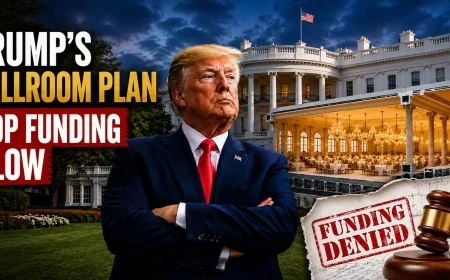
Credit card rates have caught the attention of US President Donald Trump. Last week, he proposed capping them at 10% for one year starting January 20 – an idea Cooper said "would help a little, but it wouldn't get me out of debt."
Cooper, who lives in Columbia, South Carolina, now relies on her photography business for income. "It pays for small bills – but not my credit card debt," she said.
Credit card interest rates have been rising in recent years. According to Federal Reserve data, they averaged nearly 22% as of November, up from 13% a decade ago. 37% of adults carry a credit card balance, and total credit card debt in the US exceeds $1 trillion.
"This shows that consumers are struggling, and they will continue to struggle," Susan Schmidt, a portfolio manager at Exchange Capital Resources in Chicago. “I think the Trump administration is trying to find a way out of this,” said one analyst.
Trump’s proposal, one of his campaign promises, was immediately met with resistance from bank executives, who argue that imposing limits would reduce consumers’ access to credit. Banks could lower credit limits or close higher-risk accounts.
According to the Consumer Financial Protection Bureau—an agency that Trump largely dismantled last year—interest charges are a source of revenue for banks and other large lenders, projected to reach $160 billion in 2024. Banks are already trying to protect that income, arguing that rate caps would harm consumers. JPMorgan Chase hinted at the possibility of legal action.
“People’s access to credit will be dramatically and broadly curtailed, especially for those who need it most,” JPMorgan Chase Chief Financial Officer Jeremy Barnum warned on the company’s earnings call Monday.
Citigroup Chief Executive Jane Fraser also opposed the proposal on Wednesday, warning of a “significant impact on credit availability and consumer spending across the country.”
Software Services
 |
All-in-one casino solution ready to launch — talk to our experts now |
Some analysts and economists agree that simply imposing a cap won’t benefit consumers as much as Trump and bipartisan lawmakers claim.
“A 10% cap may not be the right solution because it doesn’t necessarily help those who are already struggling,” said Schmidt of Exchange Capital Resources.
Benedict an-Kenney, Guttman assistant professor of finance at Rice University, said banks could respond by limiting lending to people with lower credit scores, who are considered higher-risk borrowers. He said these are the people most likely to lose access to credit cards.
He added that banks could try to recoup their lost earnings elsewhere, such as by increasing annual fees or late fees. Guttman-Kenney said, "It's not clear that people will be better off." "They'll still be paying roughly the same amount."
But she said some banks' expenses are "very high," meaning they have room to cut costs to maintain their margins. For example, she said they could cut spending on marketing.
And a recent study from Vanderbilt University found that if a 10% rate cap were implemented, Americans would save approximately $100 billion annually in interest costs.
"This is something people will see, they will notice, they will feel it," said Brian Shearer, a researcher at Vanderbilt's Policy Accelerator and author of the study.

"It will have a significant impact on their household budgets."
Shearer questioned a key argument made by bank executives and their lobbyists: that any reduction in rates would necessarily lead to a reduction in lending. He pointed to the strong margins banks enjoy in the credit card market. He added that interest payments don't constitute the majority of banks' revenue from credit cards.
"No policy is without trade-offs," Shearer said. "To continue lending, banks would have to reduce rewards to some extent, especially for people with lower FICO scores (credit scores).
"However, the interest savings, even for those who would lose some rewards, would far outweigh the lost rewards."
'I've lost sleep over this'
Morgan, 31, who asked to be identified only by her first name, is among those struggling to pay off thousands of dollars in debt.
Since last May, she has been using her Discover card to pay for childcare for her two-year-old daughter, despite being unemployed. She said she decided to send her daughter to daycare because she needed the freedom, as she was struggling with mental and physical health issues.

These payments have resulted in her accumulating $6,700 in credit card debt.
Morgan's husband works in the military and pays for the family's other expenses. Through a service member benefit program, she received an interest rate of approximately 3% on her credit card. She said that if she had to pay the typical 27% interest rate, sending her daughter to childcare wouldn't have been an option.
"I'm losing sleep over the $6,700, but I have some wiggle room to pay it off because once I get a job, I'll pay it off," Morgan said.
That's why Trump's proposal to cap credit card rates at 10% struck her as "a step in the right direction."
"I hope it actually goes through," she said. "It's one of the few things he's done where he's prioritized people over businesses."
Will the proposal go anywhere?
The idea of capping credit card rates has been circulating among lawmakers for years, and it has received bipartisan support.
Republican Senator Josh Hawley and Democratic Senator Bernie Sanders introduced a bill last year to cap credit card interest rates at 10%.

Democratic Senator Elizabeth Warren said in a statement that she spoke with Trump this week and "told him that Congress could pass legislation to cap credit card rates if he would actually fight for it."
"If he actually wants to do something, including capping credit card interest rates or lowering housing costs, he should use his influence and pick up the phone," Warren said.
Still, obstacles remain. Despite some support from both sides, getting Congress on board could prove difficult. House Speaker Mike Johnson distanced himself this week from the fee cap proposal, citing "negative secondary effects" and a resulting decrease in lending. "This is something we have to be very thoughtful about," Johnson said at a press conference.
And banks are prepared to continue their strong opposition.
"If the Trump administration backs down, I think it will be because of bank lobbying," said Shearer of Vanderbilt.
"This is a major source of their revenue. They're not going to give it up easily."
Thank you for reading this content.
Thank you for reading this content.
What's Your Reaction?
 Like
0
Like
0
 Dislike
0
Dislike
0
 Love
0
Love
0
 Funny
0
Funny
0
 Angry
0
Angry
0
 Sad
0
Sad
0
 Wow
0
Wow
0