































US Supreme Court Approves Use of Texas' Redrawn Voting Maps for Midterms
The US Supreme Court has allowed Texas to use its newly redrawn congressional map for the 2026 midterm elections, overturning a lower-court ruling that called the districts racially gerrymandered.

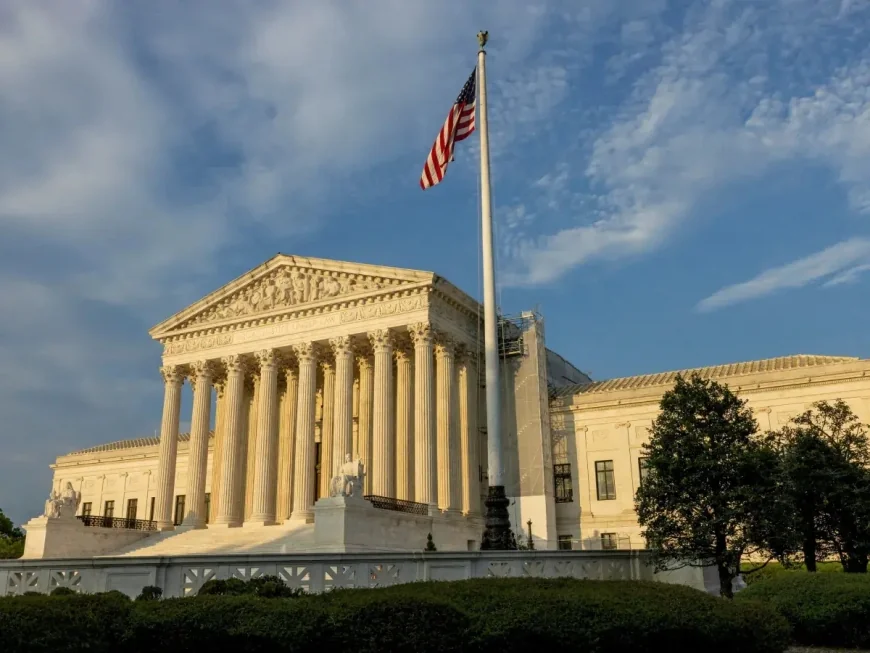
The US Supreme Court has cleared the way for Texas to use a new congressional map, which could help Republicans try to increase their majority in the upcoming 2026 midterm elections.
Thursday's unsigned decision came after Texas filed an emergency request last month to block a lower-court ruling that blocked the new map, which was passed by the state legislature and signed into law by Republican Governor Greg Abbott in August.
In a clear 6-3 decision, the Supreme Court stated that "in its initial evaluation of this case," Texas met the conditions for emergency relief and that the lower court "made at least two serious errors."
Three liberal justices dissented.
The order states, "The District Court wrongly involved itself in an active primary campaign, causing significant confusion and upsetting the delicate federal-state balance in the election."
In November, a lower court in Texas ruled that evidence showed that new voting districts were "racially gerrymandered" and ordered the state to use the congressional lines it had in place before redistricting earlier this year.
In the US, gerrymandering—the redrawing of electoral boundaries to favor a political party—is illegal only if it is based on race.
The mid-decade redistricting was challenged when Democratic lawmakers in Texas fled the state over the summer to prevent voting on the new map, sparking a rush in other states to change theirs.
California proposed a new map to offset Texas's advantages, which voters approved during the November special election. The US Justice Department is suing the state over the redistricting plan.
In November, Indiana became the latest battleground in a nationwide political tug-of-war, and other states—including Utah and North Carolina—have also joined the fray.
The Supreme Court's decision is a victory for President Donald Trump. The new map could add five more Republican seats in the midterm elections as the party fights to maintain its slim majority, and the president had filed a brief urging the top court to rule in Texas's favor. However, in her lengthy dissent to Thursday's order, liberal Justice Elena Kagan said it was "unjust to the millions of Texans whom the district court found were redrawn in their new districts based on their race."
The court's three conservative justices, in a short opinion, rejected the finding that Republicans in Texas redrew the electoral map based on race.
It is "without a doubt" that the motivation for adopting the Texas map—and later the newly drawn map in California—was "clear partisan advantage," wrote Justice Samuel Alito, joined by Justices Neil Gorsuch and Clarence Thomas.
Texas Governor Abbott celebrated the legal victory, praising the high court for restoring the state's redistricting map, saying: "We won! Texas is officially—and legally—redder."
He added, "The new congressional districts better align our representation in Washington, D.C., with our state's values. This is a victory for Texas voters, common sense, and the U.S. Constitution."
Furthermore, Gene Wu, the leader of the Democratic Party in the Statehouse, said the court failed Texas voters and American democracy.
"This is what the end of the Voting Rights Act looks like: courts that won't protect minority communities, even when the evidence is in front of them."
Congressman Hakeem Jeffries, who leads Democrats in the House of Representatives in Washington, DC, criticized the Texas map, calling it "a partisan and racially discriminatory power grab designed to subvert the will of voters."
What's Your Reaction?
 Like
0
Like
0
 Dislike
0
Dislike
0
 Love
0
Love
0
 Funny
0
Funny
0
 Angry
0
Angry
0
 Sad
0
Sad
0
 Wow
0
Wow
0