





























Why More Americans Are Quietly Changing How They Make Money
China’s CIPS system lets African minerals trade bypass the dollar, weakening dollar dominance and reshaping global power as critical minerals shift to yuan pricing.

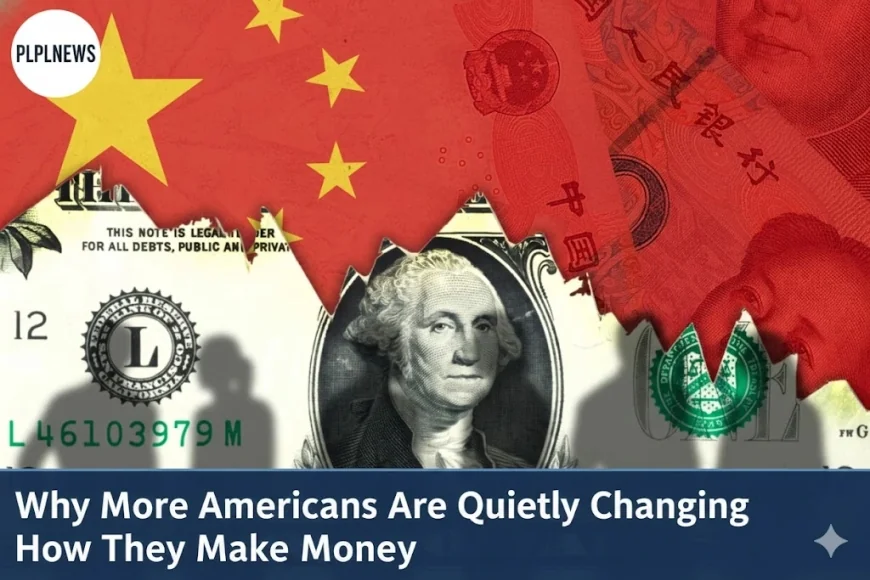
China controls the rare earths. China controls the cobalt. China, through its Belt and Road spending spree, now controls most of the mines in Africa that produce the stuff inside your phone, your car and your refrigerator.
And now China has figured out how to price and settle all of it without using a single U.S. dollar — and nobody’s told you.
, Africa’s largest lender, has quietly integrated with China’s Cross-Border Interbank Payment System (CIPS). In June, Standard Bank secured its CIPS license; in September the new rail went live, and by November Africa’s first direct yuan
 |
Create, launch, and scale your gaming platform — get instant access. |
The financial press buried it under Federal Reserve noise and earnings reports. Everyone kept scrolling. But the dollar’s monopoly is cracking.
It matters to you. Not because you trade cobalt futures. Because when the U.S. dollar loses its monopoly on pricing the world’s critical resources, your purchasing power shrinks. That shows up at the grocery store, at the gas pump and in every aisle of every store. You just won’t know why.
Here’s what happened: A payment that used to take three to five days now takes seven seconds. Costs dropped 98%. A cobalt shipment from Congo to Shanghai now settles in Chinese yuan, without touching New York, without anyone in Washington getting a vote. The dollar just got cut out of the transaction entirely.
This isn’t about banking plumbing. It’s about power. Who sets commodity prices. Who controls sanctions. Who gets to define the term risk-free. For 50 years, that’s been the U.S. Not anymore.
Here’s what happened while America was busy with Fed meetings.
Africa holds about 30% of the world’s critical minerals. Congo has most of the cobalt. South Africa has the platinum. The continent is loaded with copper, chromium, lithium and rare earths. This is not optional stuff. Cobalt goes in every EV battery. Rare earths go in every semiconductor. Platinum goes in hydrogen fuel cells. If the 21st century runs on anything besides oil, it runs on African rocks.
China noticed. Beijing has spent the past decade writing checks to Africa. Its Belt and Road initiative poured money into African mining, railways to the mines, ports to ship the ore, refineries to process it — and contracts that guarantee Chinese buyers get first dibs on the output.
By the first half of 2025, Chinese investment in African mining was up almost 400% from a year before. Mining now represents 20% of all Chinese projects in Africa, up from 8% five years ago. This isn’t foreign aid. This is vertical integration.
China bought the warehouse. Now they’re changing the currency on the cash register.
Standard Bank operates in 21 African countries. It handles trade finance across the continent. When it plugs into CIPS, every mining company, commodity trader and central bank in its network now has a direct line to settle in yuan. No dollars. No permission required from Washington.
The monopoly doesn’t die screaming
For 50 years, if you wanted to buy oil, you paid in dollars. If you wanted to buy copper, you paid in dollars. If you wanted to buy anything that crossed a border, you probably paid in dollars. That wasn’t because the dollar was magical. It was because the plumbing only worked in dollars. Every international payment ran through SWIFT, and SWIFT ran through New York.
Then America started using that plumbing as a weapon. Iran got cut off. Russia got cut off. In 2022, when the U.S. froze Russian foreign-exchange reserves, every country that watched started asking the same question: What happens when Washington decides we’re next?
China built an alternative. In 2024, CIPS handled $24 trillion worth of transactions, up 43% from the year before. And now African banks are plugging into it.
This is how monopolies die. Not with a bang, but with better plumbing that routes around you.
If this were just one bank in South Africa, you could ignore it. But central banks around the world are acting like something big is shifting.
Nigeria pulled its gold reserves out of American vaults and brought them home. Ghana increased gold reserves by 35% in one year. Namibia announced it’s moving 3% of foreign reserves into gold, up from nearly zero. The dollar’s share of global central-bank reserves has dropped below 47%, down from 65% two decades ago. Gold’s share is climbing toward 20%, highest since the 1960s.
And in November the BRICS moved ahead with an initiative to develop a precious-metals exchange that would allow trade settlements in gold, platinum, diamonds and rare earths. South Africa, Egypt and Ethiopia are full members. Nigeria and Uganda are partners.
Central bankers are paid to be boring and cautious. When they start hoarding gold and building alternative settlement systems, something real is happening. They see what China sees: The dollar’s monopoly made sense when there were no alternatives. Now there are alternatives. And they work.
This is not random. This is coordinated preparation for a world where the dollar shares the throne instead of sitting on it alone
Thank you for reading this content.
If you find it helpful, then checkout : https://plplnews.com/biden-save-student-loan-plan-ended-new-repayment-rules
Also check out the latest Hyundai : https://plplnews.com/second-gen-hyundai-kona-review
What's Your Reaction?
 Like
0
Like
0
 Dislike
0
Dislike
0
 Love
0
Love
0
 Funny
0
Funny
0
 Angry
0
Angry
0
 Sad
0
Sad
0
 Wow
0
Wow
0