


























Health Secretary Says Doctor Strike Hurting Patients
Health Secretary Wes Streeting said the doctors' renewed strike over pay was inflicting "pain and suffering" on patients.

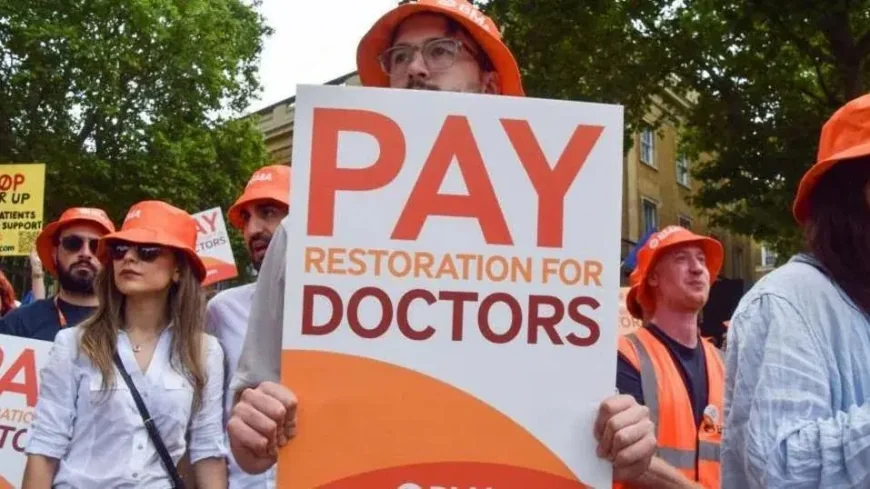
The doctors' union, the British Medical Association (BMA), says they are still not paid enough and there are too few training places or jobs.
The NHS says almost all services will continue, and patients should attend appointments unless advised otherwise. Hospitals will be under the greatest pressure – resident doctors make up about half of their medical staff.
NHS England says it wants to continue 95% of non-essential work, such as hip and knee surgeries, by redeploying consultants and other senior doctors and paying them overtime, as well as relying on those who don't strike. Nearly a third of resident doctors are not members of the BMA and will continue to work.
But this will come at a heavy cost, as the NHS estimates the five-day strike will cost £240 million.
Despite efforts to keep services running, 23-year-old Chloe Rogers from Nottingham has had her crucial scan appointment cancelled.
Chloe says she received the news via text message, but was not given a new date.
Chloe had a private MRI scan two months ago, which revealed signs of endometriosis in her intestines and ovaries. This means tissue similar to the lining of the uterus is growing around these organs. She said some of these symptoms are "worrying."
She says the appointment was to "figure out next steps" in her medical care.
"When I read the message, it really broke my heart, and this isn't the first appointment I've had that's been cancelled or delayed," Chloe told Your Voice, Your BBC News.
"It's affecting my quality of life. It's been going on for the last two years. These strikes affect people's quality of life."
'Depending on the consultants'
Dr. Vicki Alner, consultant in geriatric medicine at Milton Keynes University Hospital, says her ward rounds took significantly longer than usual today due to the doctors' strike.
Some resident doctors have observed the strike at her hospital, but others have also come in. She says staffing on all wards is safe, but it's less efficient and everything is running slower than normal.
"The main thing is the safety of our patients," says Dr. Alner.
"We normally had four resident doctors on every ward, and now we have one or none. And we rely on consultants to see everyone. But everyone has been put together, so all our emergency rotations have been completed," he said.
Pay Dispute
Professor Meghna Pandit, medical director of NHS England, said it was disappointing and frustrating that another round of industrial strikes – the 13th – was taking place at a challenging time for the NHS, when flu cases are rising earlier than usual in the autumn.
She added, "Despite this, all NHS staff are working hard to maintain care and minimise disruption."
But BMA leader Dr. Tom Dolphin said keeping most services running would be "challenging."
He said doctors have a legal right to strike and should not be "bullied or coerced" into working.
And he warned that his members would only leave the protest site if there was a major emergency—such as a mass casualty incident.
He said the BMA had reached a "deadlock" with the government over pay and jobs.
"Our pay is still a fifth lower than it was in 2008," he said. He added, "There are thousands of doctors who are unable to access training positions, becoming the future specialists and general practitioners we need."
The union has also warned that doctors are having difficulty finding jobs during a crucial stage of their training—between the second and third years, when they begin specialty training.
This year, there were more than 30,000 applicants for 10,000 jobs in this stage, although some will be foreign doctors.
The BMA says it wants to negotiate. Dr. Dolphin said: "We want a solution. We don't want to go on strike. We would much rather care for patients."
What's Your Reaction?
 Like
1
Like
1
 Dislike
0
Dislike
0
 Love
0
Love
0
 Funny
0
Funny
0
 Angry
0
Angry
0
 Sad
0
Sad
0
 Wow
0
Wow
0