































New Flu Mutation Could Trigger Worst Outbreak in a Decade
A new mutation in the H3N2 flu virus has triggered an unusually early and potentially severe flu season.

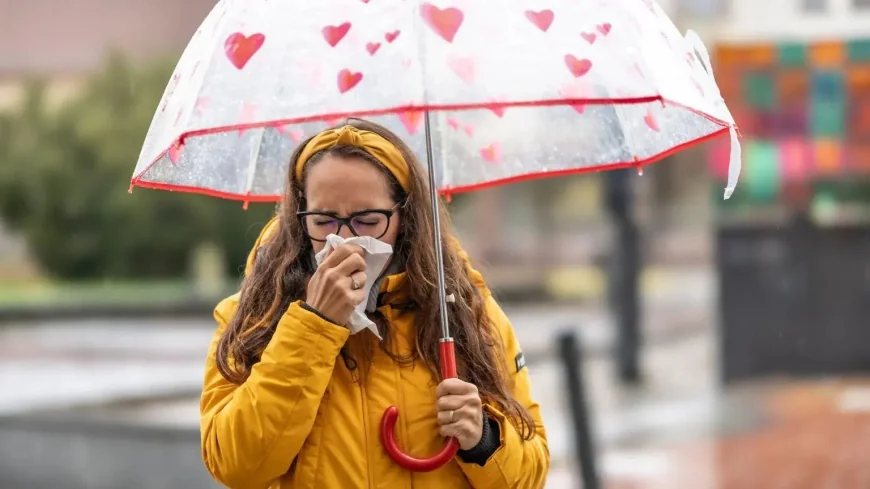
A seasonal flu virus suddenly mutated in the summer; it appears to be evading some of our immunity; it has started the flu season more than a month early, and it's a type of flu that history tells us tends to be more severe.
The NHS has now issued a "flu jab SOS" as fears grow that this winter will be particularly difficult.
There are many nuances and uncertainties, but leading flu experts have told me they wouldn't be surprised if this turned out to be the worst flu season in a decade.
"We haven't seen a virus like this for some time, these dynamics are unusual," says Professor Nicola Lewis, director of the World Influenza Centre at the Francis Crick Institute.
"I am absolutely concerned," she says. "I'm not panicking, but I am concerned."
So what is happening? And what can we do?
Scientists track the evolution of influenza viruses because they are constantly mutating and the seasonal flu vaccine has to be updated every year.
This evolution happens in a rhythm called "shift and drift".
Most of the time the virus drifts, making small changes, and then occasionally there is a sudden, big shift when the virus mutates significantly.
That's what happened this year in June.
Professor Derek Smith, director of the Centre for Pathogen Evolution at Cambridge University, says a strain of the H3N2 seasonal flu showed seven mutations, leading to a "rapid increase" in reports of the mutated virus.
Unusually, this happened in the middle of the northern hemisphere summer, outside of flu season.
"It will almost certainly spread around the world, so from that point of view, it's something that will come quickly," says Professor Smith.
By September, as children went back to school, the nights drew in and temperatures dropped, cases began to rise. What the mutations are actually doing is still being investigated, but they are likely helping the virus evade the immunity we've built up over the years from previous flu infections and vaccinations.
The result is that it's becoming easier for the virus to infect people and spread – which is why the flu season has started so early in the UK and other countries, including Japan. Professor Lewis says it's "absolutely the most important year" to get vaccinated and "if your GP has called you, please get your flu vaccine as soon as possible".
However, this year's vaccine doesn't perfectly match the mutated virus.
The decision on the vaccine's design was made in February to allow enough time to manufacture millions of doses – and then the new mutant emerged in June.
Professor Fraser said: "Some protection is better than none, but this year will probably be one of those years where the level of protection is lower than in years when the match is better; it's not an ideal situation."
The vaccine will still trigger the body to produce antibodies that can recognize and attach to the flu virus.
But the biggest benefit is expected to be in reducing the severity of the illness, rather than preventing you from getting sick or slowing the rate of virus spread.
And the flu vaccine protects against several strains of flu, each of which has the potential to cause its own waves of infection.
Dr. Mary Ramsay, Director of Public Health Programmes at the UK Health Security Agency, says: "Whatever strains circulate here this winter, we can be confident that the vaccine will still help protect the most vulnerable people from serious illness and hospitalization."
Meanwhile, advice has been sent to doctors reminding them that early antiviral treatment reduces the risk of complications from the flu.
Japan has also seen an early start to its flu season and has closed schools to help contain the infection. These aren't Covid-style lockdowns, but rather short-term measures that the country is using to try to stop the spread of the virus.
Nobody knows for sure what will happen in the coming months.
"It could all be over by next week," says Professor Lewis, "but I don't think that's likely."
What's Your Reaction?
 Like
0
Like
0
 Dislike
0
Dislike
0
 Love
0
Love
0
 Funny
0
Funny
0
 Angry
0
Angry
0
 Sad
0
Sad
0
 Wow
0
Wow
0