






























OBR: Reeves Did Not Mislead on UK Budget Challenges
A senior OBR official, Professor David Miles, said Chancellor Rachel Reeves did not mislead the public about the UK’s difficult financial position ahead of the budget.

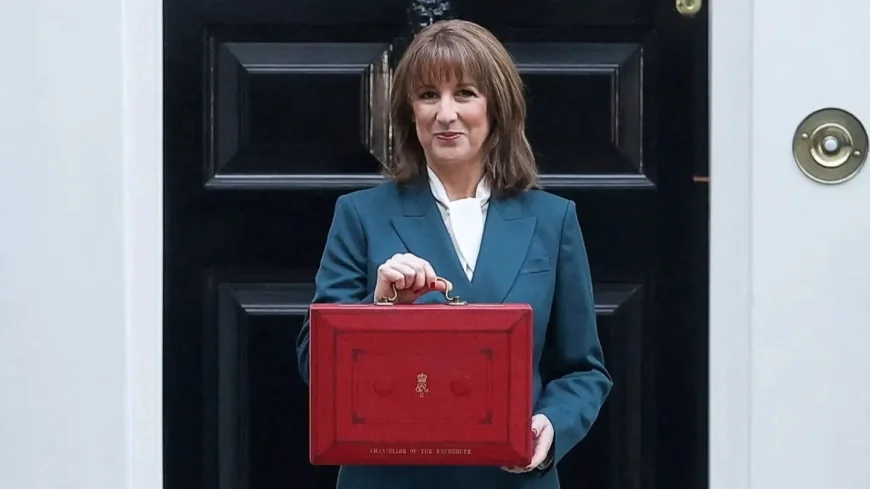
A senior official at the UK's economic forecaster has said he does not believe the Chancellor was misleading when she said the state of public finances was "very difficult" before the budget.
Professor David Miles of the Office for Budget Responsibility (OBR) told MPs that Rachel Reeves' comments before announcing tax and spending plans were "no different" from the situation they faced.
Reeves rejected claims that she misled the public about the country's finances when the OBR's economic forecast showed they were better than generally thought.
However, Professor Miles said that despite the forecast, the Chancellor still faced "a very difficult budget and very difficult choices."
He said the OBR raised concerns with Treasury officials about media leaks before the budget, adding: "I think it was clear that we didn't find it helpful. We made that clear."
But he said the watchdog was not "in a fight" with the Treasury.
The OBR assesses the health of the UK economy and, although independent, works closely with the Treasury.
Professor Miles faced the Treasury Select Committee alongside fellow OBR official Tom Josephs.
Richard Hughes, the former chairman of the OBR, did not attend after resigning on Monday due to a mistake on Budget Day that led to the early publication of the watchdog's official forecast document.
Over the past few weeks, a political controversy has erupted over the information shared with the public about the health of the economy and the decisions made by the Chancellor.
Last week's budget included a total tax increase of £26 billion, including a plan to raise £8 billion by extending the freeze on income tax and National Insurance thresholds for another three years. The limit on two child benefits was also abolished. During the budget preparations, Reeves repeatedly spoke about a decline in the UK's projected economic productivity, which would make it difficult for him to meet his borrowing rules. This led to speculation that income tax rates would also be raised, breaking a Labour Party manifesto promise.
On November 4, he warned in a rare pre-budget speech at Downing Street that UK productivity was "weaker than previously thought" and that this would "also impact public finances, in the form of lower tax receipts."
However, it later emerged that the OBR, which assesses the government's tax and spending policy, had told the Treasury on October 31 that it was on track to meet its main borrowing rule by £4.2 billion, as the decline in productivity was being offset by higher salaries, thereby increasing government tax receipts.
The Conservative Party claimed the Chancellor had been overly pessimistic about the "thin veil" of tax increases to increase welfare spending, with Leader Kemi Badenoch claiming he had "lied to the public."
The £4.2 billion buffer was less than the £9.9 billion that Reeves had left for himself in the previous budget, and Professor Miles told the Treasury Select Committee of MPs that this still posed a "major" challenge for the government, which had wanted to increase this total.
The so-called headroom that chancellors have left for themselves—essentially a buffer they can rely on—has decreased in recent years. Before November 2022, chancellors used to create a buffer of £20 billion–£30 billion.
Responding to MPs' questions about why the Chancellor didn't mention a surplus in the forecast, Professor Miles said that the £4.2 billion, although a positive number, was "by a very small margin," and added that the OBR didn't really want it to be interpreted as "very, very good news, there's no shortage - as people were saying."
"I don't think, in my own view, the Chancellor's statement that the financial situation was very difficult earlier that week was misleading.
"What I meant, and others may interpret differently, was that the Chancellor was saying it was a very difficult Budget and that very difficult decisions would need to be made.
"And I don't think that in itself was any different from our final pre-measures assessment, which, although it showed a very small positive amount of so-called headroom, it was very small."
Professor Miles said the £4.2 billion buffer would have also been reduced to minus £3 billion because the OBR's estimates did not take into account the government's U-turn on welfare and winter fuel payments.
Mr. Josephs also apologized to MPs for the early release of the OBR's estimates document, which had essentially confirmed many new budget measures before the Chancellor's announcement.
On Monday, Richard Hughes resigned from the OBR, saying he took "full responsibility" for the issues identified in an investigation into the OBR's missteps, which he described as the biggest failure in the organization's 15-year history.
Mr. Josephs said the OBR would implement the investigation's recommendations.
What's Your Reaction?
 Like
0
Like
0
 Dislike
0
Dislike
0
 Love
0
Love
0
 Funny
0
Funny
0
 Angry
0
Angry
0
 Sad
0
Sad
0
 Wow
0
Wow
0