



















SAS war crimes evidence suppressed, inquiry finds
A former senior UK Special Forces officer has told the Afghanistan Inquiry that two former heads of UK Special Forces suppressed evidence of possible SAS war crimes in Afghanistan.

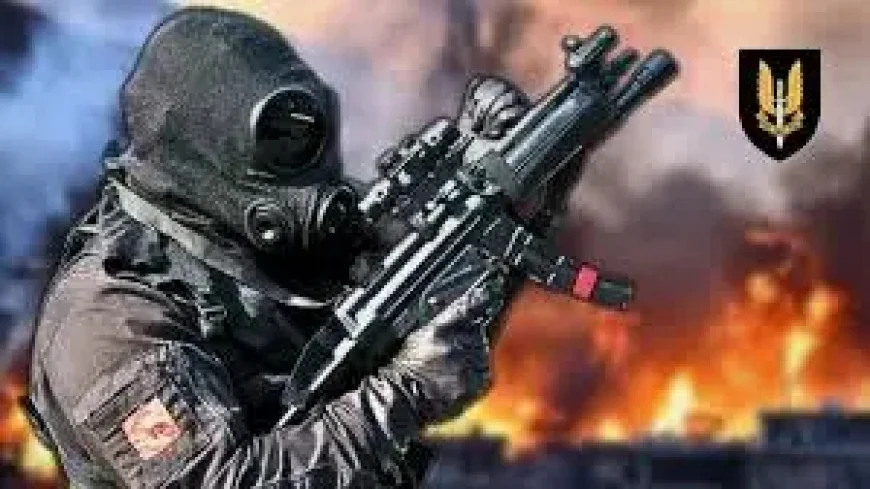
Two former heads of UK Special Forces suppressed evidence of possible SAS war crimes, a former high-ranking officer has told a public inquiry in a closed evidence session.
The officer, who was the most senior in the Special Forces, said he provided "explosive" evidence suggesting "criminal behavior" to the then-Director Special Forces in 2011.
The officer also told the inquiry that the subsequent Director Special Forces, who took over in 2012, "clearly knew there was a problem in Afghanistan" but took no action.
He stated in his evidence that "only one director was unaware of this," and added that the UK Special Forces leadership "largely suppressed" the allegations.
At the inquiry, the officer known by the cipher N1466 confirmed that no Special Forces head had made any disturbing allegations to the Royal Military Police (RMP), despite British law requiring commanders to inform the RMP of any serious criminal offenses by anyone under their command.
N1466's testimony is significant because he is the highest-ranking former Special Forces officer to allege that those who led the SAS suppressed evidence of war crimes.
His testimony comes from a summary of a closed-door hearing of the Independent Inquiry into Afghanistan, which is investigating allegations of Special Forces war crimes.
Inquiry rules mean that the names of the former directors the officer accused cannot be reported.
The Afghan Inquiry was launched following allegations of unlawful killings against the SAS.
The program revealed that in just one six-month tour, the SAS had killed 54 prisoners and unarmed individuals under suspicious circumstances.
The program also found evidence that in 2012, the Director of Special Forces, General Sir Mark Carleton-Smith, had failed to report war crimes.
At the start of the inquiry, both General Carleton-Smith and the previous Director of Special Forces, Lieutenant General Jonathan Page, were named in the investigation in connection with claims that they had failed to inform the RMP about allegations.
'Criminal Behavior'
N1466 told the investigation that he first became concerned in February 2011, when he noticed that SAS reports returning from Afghanistan indicated that the regiment was killing people in suspicious circumstances and in excessive numbers, and that some operations had recovered so few enemy weapons that the number of deaths could not be justified.
N1466 said his suspicions began with a night raid in which nine Afghan men were killed and only three weapons were claimed to have been recovered. Panorama visited the site of the raid years later, in 2022, and found bullet holes inside the room where the men had died huddled near the floor.
Weapons experts told Panorama that the pattern suggested the victims were shot while lying down, and the shootings described by the SAS in their report were unlikely. The family said they were civilians and had no weapons in their home.
N1466 also told the inquiry that he had learned of whistleblower testimony that SAS troopers had been overheard during a training course boasting about killing all "fighting-age" men during operations, regardless of whether they posed a threat or not.
With the operational report, N1466 was "deeply disturbed by the fact that I strongly suspected that innocent people, including children, had been unlawfully killed," he testified.
"Let me be clear, we are talking about war crimes," he said.
In response, in April 2011, N1466 commissioned a review of recent SAS operations by another officer at Special Forces Headquarters. He told the inquiry that the results for the SAS appeared "very bad."
This review was part of the evidence he presented to the then-Special Forces Director in 2011. He said he "clearly told him" that "there was a high likelihood of criminal behavior."
N1466 testified that the Director was "fully aware of what was happening" regarding alleged war crimes in Afghanistan, and was "fully aware of his responsibilities" when it came to reporting the allegations to the Military Police.
The Director did not contact the police, but instead ordered an internal review of the SAS squadron's tactics – a move N1466 described as a "warning shot" to reduce violence within the squadron.
N1466 said the Director "made a conscious decision to hush it up, hide it, and do a little fake exercise to make it appear as if they had done something."
The "tactics, techniques, and procedures" were then reviewed by an SAS officer who had been to Afghanistan but had only spoken to other members of the regiment. This report fully accepted the statements of those suspected of carrying out unlawful killings.
Bruce Holder KC, the first Director of Service Prosecutions, was responsible for bringing charges and prosecuting those serving in the armed forces.
What's Your Reaction?
 Like
0
Like
0
 Dislike
0
Dislike
0
 Love
0
Love
0
 Funny
0
Funny
0
 Angry
0
Angry
0
 Sad
0
Sad
0
 Wow
0
Wow
0