
























Scientist Works to Save King Tut’s Tomb from Collapse
The tomb of the young pharaoh, first discovered by a British archaeologist in 1922, is one of the most famous tombs in the Valley of the Kings near Luxor, Egypt.

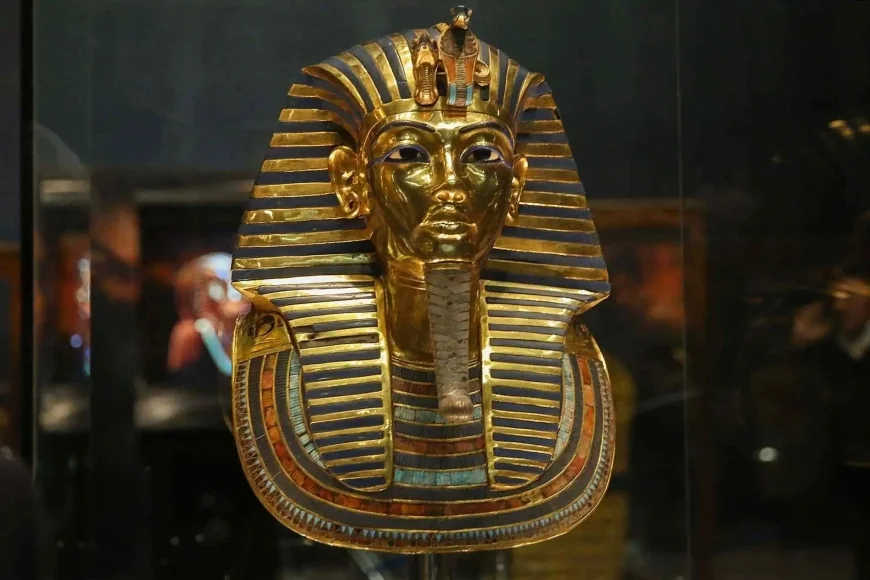
What You Should Know
- A 2025 study is exploring ways to preserve King Tut's tomb.
- Located in the Valley of the Kings near Luxor, Egypt, this iconic tomb is one of the least preserved in the region.
- Over time, flash floods and cracks have contributed to the erosion of this ancient tomb.
The tomb of King Tutankhamun – better known as King Tut – is in danger of being destroyed, but one researcher is working to save it.
A 2025 study published in the peer-reviewed scientific journal NPJ Heritage Science by Seyed Hemeda, head of the Architectural Conservation Department at the University of Cairo, stated that the tomb “has been subjected to long-term impacts from both flash flooding and major [earthquake] faults.”
Hemeda explained that the tomb is one of the least preserved sites in the Valley of the Kings, a vast royal cemetery located on the west bank of the Nile River near Luxor, Egypt.
The study states that "serious cracks" in the tomb's roof have allowed rainwater to "seep in," jeopardizing the "structural integrity of the tomb." Furthermore, the water has increased humidity levels in the structure, leading to the growth of mold that affects the ancient frescoes on the tomb's walls. This, in turn, creates "considerable difficulties" for archaeologists working to restore the artwork.
However, some steps are being taken to prevent further damage.
Hemeda used experimental 3D geotechnical modeling to identify the parts of the tomb that most need strengthening to prevent further cracks and flooding. He said these findings also "provide a reference for the stability analysis of other similar complex underground structures."
The study's findings could help archaeologists better preserve the tomb, as well as the historically significant artifacts it contains, for future generations.
What's Your Reaction?
 Like
0
Like
0
 Dislike
0
Dislike
0
 Love
0
Love
0
 Funny
0
Funny
0
 Angry
0
Angry
0
 Sad
0
Sad
0
 Wow
0
Wow
0