


























Suzuki Across Review: A Family SUV That Bridges Toyota and Suzuki
You would be forgiven for doing a double take when you look at the Suzuki Across for the first time, as its design closely mirrors that of the Toyota RAV4. And there’s a very good reason for that resemblance.

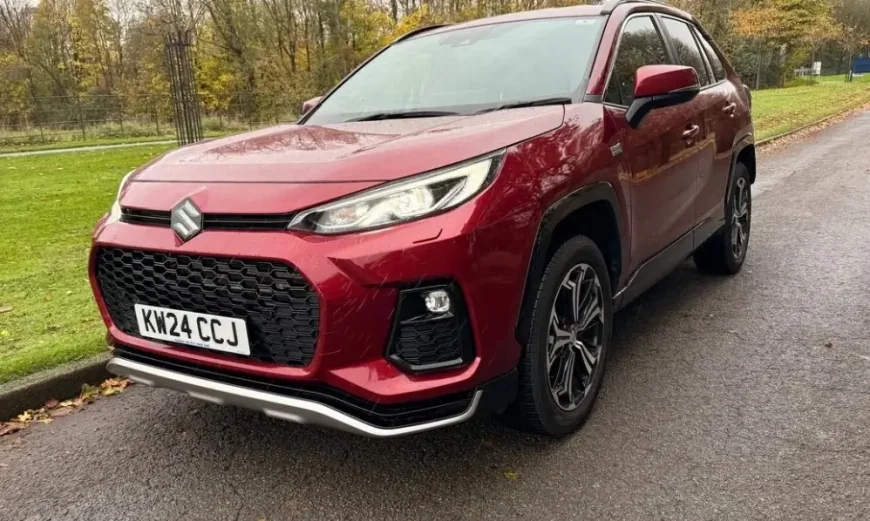
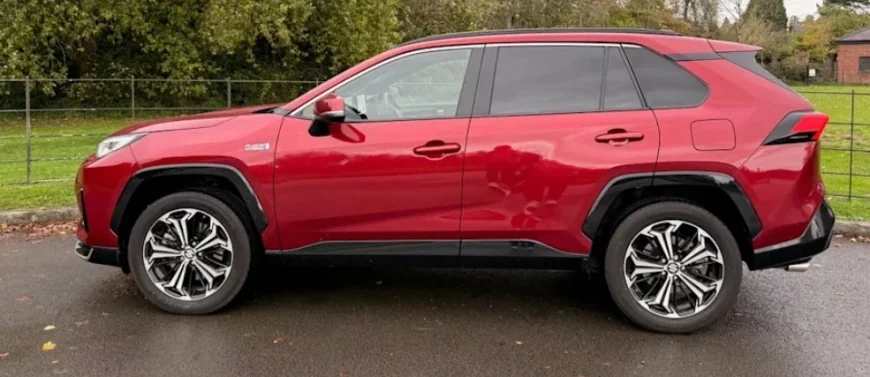
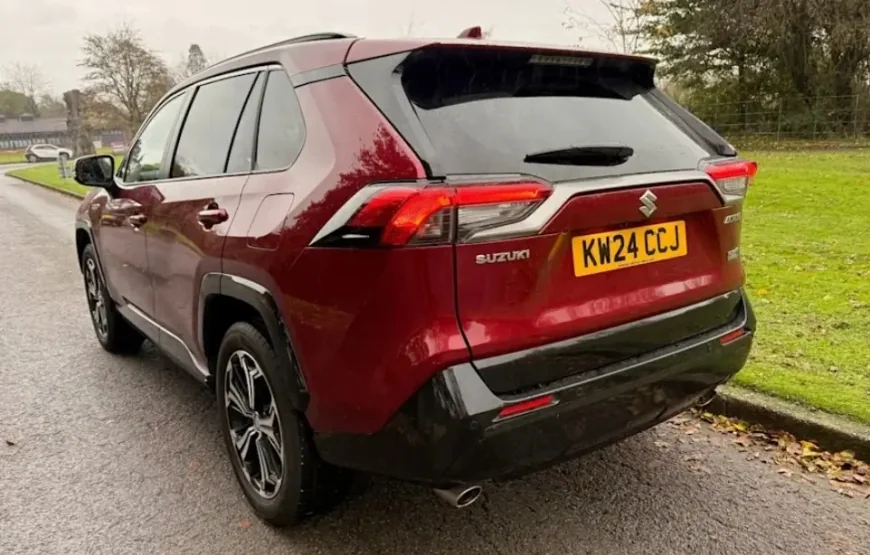
The Across is part of a collaboration between the two Japanese carmakers. It’s a situation we are seeing a lot more of these days, to cut down development costs. It also offers Toyota access to markets where Suzuki is very strong, especially India.
But it’s not just a straightforward case of replacing a few badges. Suzuki has put its own stamp on the car with a completely redesigned front end, amongst other styling cues.
Toyota has a wealth of hybrid know-how and that has now been transferred to the Suzuki Across, which sees a 2.5-litre petrol engine working with two electric motors and an 18.1kWh battery pack.
There is just the one trim level, which carries quite a heavy price-tag for a Suzuki of £49,679, making it almost double the price of any other car in the company’s line-up. But for that customers get a car that’s packed with every creature comfort imaginable and it covers practicality bases well too, which is always a plus-point on any family-focused SUV. It also has the bonus of being all-wheel drive which is becoming more and more appreciated with our ever-changing weather patterns.
How we tested
We tested the Suzuki Across on a mix of roads, including busy town centres, winding country lanes and a lengthy motorway run in some of the worst driving conditions imaginable – thank you, Storm Claudia!
Suzuki Across: From £49,679, suzuki.co.uk
Independent rating: 7/10
-
Pros: Sharp acceleration, practical, generously equipped, decent EV-only range
-
Cons: Pricey for a Suzuki, e-CVT transmission can be noisy under heavy acceleration, feels light when buffeted by high winds
Suzuki Across Specs
-
Price range: £49,679
-
Battery size: 18.1kWh
-
Maximum EV range: 46.6 miles
-
Engine: 2.5-litre petrol
-
Claimed range: 565 miles
Battery, range, charging, performance and drive
Powering the Suzuki Across is a four-cylinder, 2.5-litre petrol engine working in tandem with an 18.1kWh battery and two electric motors, one on each axle, for four-wheel drive. With 302bhp, the Across can complete the 0-62mph dash in a very impressive 6.0 seconds and it tops out at 112mph.The electric-only range of 46.6 miles is fine and should easily cover the average daily commute for most people, and that in turn helps to keep day-to-day running costs low. When longer journeys are needed, there is the very capable petrol engine to fall back on and the car can deliver a WLTP-tested 42.9mpg on a combined run. We were seeing close to that figure during our week-long test.
While there is no traditional gearbox, the Across features an e-CVT automatic system which is certainly efficient enough provided you don’t floor the accelerator pedal too quickly. Do that and it will put in quite a protest before accelerating smoothly away.
The vehicle is confident when fizzing through country lanes with decent grip and nice balance, and the elevated seating position results in unobscured all-round driver visibility. That said, the wide B pillars do obscure the over-the-shoulder view a little, but the car has cameras and sensors to help when reversing.
It’s an SUV that can happily sit at 70mph on longer motorway journeys for hours on end. I drove 130 miles during November’s Storm Claudia on the M4 and, despite being buffeted slightly by high winds, the Across didn’t miss a beat. There are three drive modes, called Eco, Normal and Sport, which slightly alter the performance of the vehicle, plus a Trail mode for added 4x4 traction.
At higher speeds the refinement levels take a hit, with quite a lot of road surface and wind noise filtering into the cabin, and expect a high-pitched drivetrain whine if you are too eager with the throttle too.
Charging the 18.1kWh battery via a 7kW home or work-based wallbox takes about 2 hours and 45 minutes. Additionally the car can be charged on the fly using the petrol engine via the Battery Charge mode. There is also an EV-only mode to drive just using the existing electric range, along with an automatic EV/HV setting to get the best combination of battery and petrol power.
What's Your Reaction?
 Like
0
Like
0
 Dislike
0
Dislike
0
 Love
0
Love
0
 Funny
0
Funny
0
 Angry
0
Angry
0
 Sad
0
Sad
0
 Wow
0
Wow
0