






















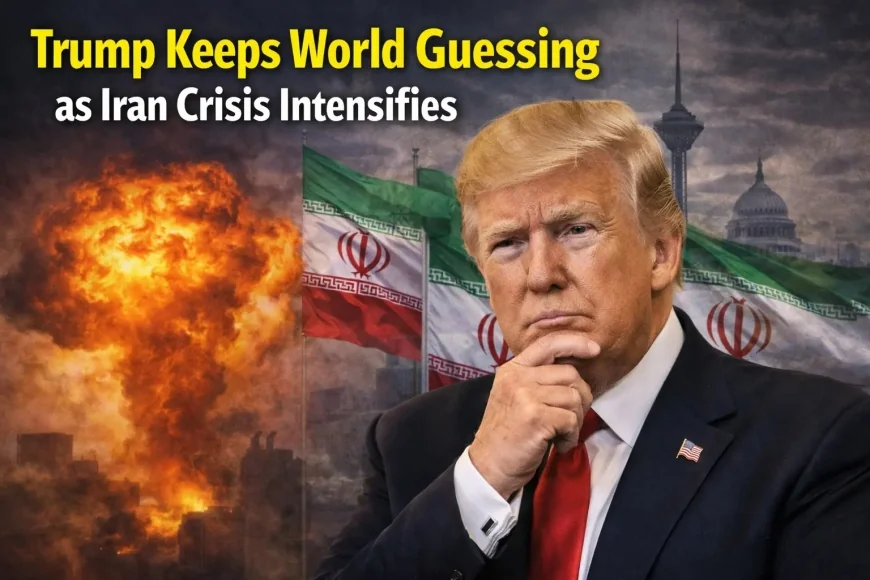
Trump Keeps World Guessing as Iran Crisis Intensifies
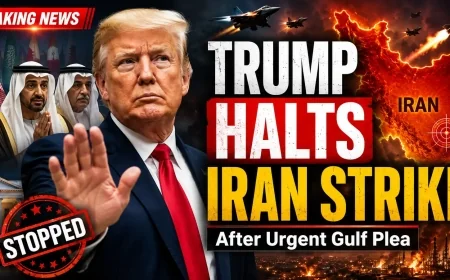
Donald Trump signals possible US military action in Iran, then abruptly pauses, leaving allies wary as Iran protests and regional tensions intensify.

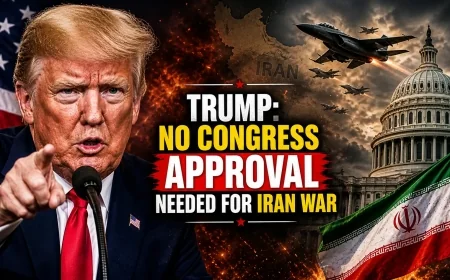
For nearly two weeks, Donald Trump appeared to be on the verge of intervening in Iran.
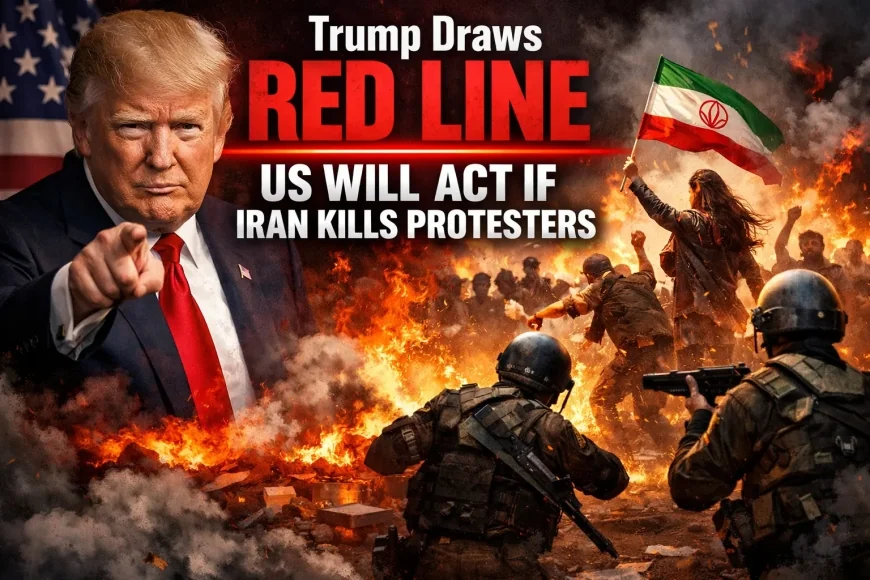
From his threat on January 2nd to "help" Iranian protesters after authorities used violence against them, to his promise this week that "help is on the way," the American president's stance seemed firm.
On Tuesday, a journalist covering the president's visit to Detroit asked how Mr. Trump would respond if Iranian authorities began executing detainees.
Iranian activists had reported that the family of Irfan Sultani had been told that the 26-year-old shopkeeper had been sentenced to death for participating in the protests.
"If they do that, we will take very strong action," the president replied, adding that his goal in Iran was to "win."
Throughout Wednesday, there were indications that US military action might be imminent.
American, Qatari, and British personnel stationed at the large Al Udeid Air Base in Qatar were being relocated.
US embassy staff and citizens in Saudi Arabia were advised to be vigilant, reminiscent of similar instructions last June when US bombers attacked Iranian nuclear facilities.
Amid reports of airspace closures and flight cancellations, it seemed that news of US strikes would break in the coming hours. The only question was how large the attack would be.
But then, speaking to reporters at the White House in the afternoon,Trump suddenly reversed course.
"We've been told that the killings are stopping in Iran," he said. "And there are no plans for executions... I've received this from reliable sources."
The president did not disclose the nature of the reliable source, except to say that the information came from "very important sources on the other side," and that the US had received "a very good statement from people who know what's going on."
But has the moment of crisis passed, or is this merely a pause?
Trump has not explicitly ruled out military action. He said he would "see what the process is" before taking the next step.
Software Services
 |
Start your own gaming platform for just $3,000 |
House Foreign Affairs Committee Ranking Democrat Gregory Meeks warned in a statement, "U.S. military action taken under the guise of helping these protesters could backfire: stifling a genuine movement, strengthening the regime's narrative, and harming civilians." Reports from the Gulf suggest that some of Washington's allies, including Saudi Arabia, Qatar, and Oman, also have serious concerns about the potential consequences of U.S. military intervention.
Both Saudi Arabia and Qatar have been targets of Iranian retaliation in the past.
In 2019, Iran launched drones and cruise missiles at Saudi Arabia, targeting key oil facilities and temporarily halving the Kingdom's oil production. Iran denied involvement, claiming the attack was carried out by the Houthis in response to Saudi Arabia's military involvement in Yemen.
Saudi allies, including the U.S., France, Germany, and the UK, all agreed that Tehran was responsible.
Last year, on June 23, Iran fired several medium-range ballistic missiles at Al-Udeid in response to a U.S. attack on Iranian nuclear facilities the day before.
Tehran had signaled its intentions in advance, and there were no casualties, but the warning was clear: Iran is capable of retaliation.
The Gulf monarchies, which have worked to strengthen their ties with Iran in recent years, fear the kind of widespread regional instability that a major U.S. military operation could trigger.
As is often the case with President Trump, the goal seems to be to keep everyone guessing.
Following the successful military campaign to remove Nicolás Maduro from power in Venezuela, it is advantageous for the president to have the leadership in Tehran believe that he could do something similarly spectacular in Iran. “Dramatic headlines, the use of raw power, and minimal casualties—these are all things Trump likes,” Andrew Miller, a former deputy assistant secretary of state in the Biden administration, wrote in Foreign Affairs magazine.
“And an attack on Iran could deliver all three.”
But the president’s desire to “win” in Iran may have stayed his hand.
The regime in Iran is tough, battle-hardened, and capable of weathering repeated storms. By comparison, Venezuela, despite its vast oil reserves, is little more than a banana republic.
The idea of finally vanquishing the Islamic Republic after decades of intense hostility and conflict must be incredibly tempting, especially for a man who claims the American military has never been more powerful.
But that goal, however desirable it may be in Washington, still seems distant. Airstrikes could inflict significant damage on Iran’s security system, nuclear and missile programs, but they are unlikely to “liberate” Iranians protesting against their government.
In recent days, unnamed U.S. officials quoted in the press have hinted at a number of other, more covert methods, including cyberattacks, aimed at undermining the government's effectiveness and encouraging protesters.
Some of these methods were used effectively during the abortive operation to capture Nicolás Maduro in Caracas.
However, without a clear objective, it is difficult to see how such methods could have any lasting impact.
Clearly, fearing the government's raw, indiscriminate power, such a bold move by the opposition seems highly unlikely, at least for now.
Miller argues that Trump should cease his threats unless the president is fully prepared to carry them out. The fact that protesters are naming streets after the American president and begging for U.S. intervention shows that he has dangerously raised expectations.
"Bluffing when lives are at stake is not only unbecoming of the presidency, but also inhumane," Miller writes.
Given U.S. media reports, unconfirmed by the Pentagon, that a carrier strike group led by the USS Abraham Lincoln has been ordered to redeploy from the South China Sea, it is entirely possible that Donald Trump is seeking to maximize his options.
Thank you for reading this content.
Thank you for reading this content.
What's Your Reaction?
 Like
0
Like
0
 Dislike
0
Dislike
0
 Love
0
Love
0
 Funny
0
Funny
0
 Angry
0
Angry
0
 Sad
0
Sad
0
 Wow
0
Wow
0