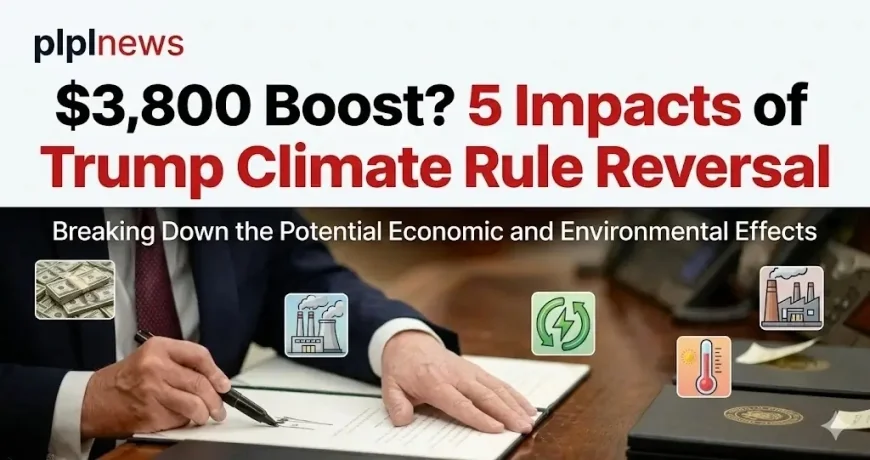
WASHINGTON — Former President Donald Trump and environmental officials led by Lee Zeldin have announced a rollback of an environmental rule originally introduced during the administration of Barack Obama.
Supporters of the move argue that the repeal of the climate regulation could reduce regulatory costs and provide economic benefits to American households.
Officials Cite Consumer Savings
According to officials involved in the decision, eliminating the rule could potentially save Americans more than $3,800 per person over time by lowering compliance costs for industries and reducing regulatory burdens.
Advocates say the change is intended to stimulate economic growth while easing costs for businesses operating in energy, manufacturing, and transportation sectors.
Policy Shift in Environmental Regulation
The rollback represents another shift in the ongoing debate over federal environmental policy.
Supporters of regulatory reform say certain environmental rules can impose heavy financial burdens on companies and consumers. Critics, however, argue that weakening climate regulations could slow efforts to address long-term environmental challenges.
Role of Environmental Agencies
The policy change involves agencies responsible for implementing federal environmental laws, including the Environmental Protection Agency.
Agency officials say the decision aims to balance environmental protections with economic considerations.
A Continuing National Debate
Environmental regulations have remained a central issue in American politics for years. Different administrations have taken varying approaches, with some prioritizing stricter environmental standards while others emphasize regulatory flexibility and economic growth.
Experts say the latest policy decision is likely to fuel further debate in Congress, among state governments, and across environmental advocacy groups.
What Comes Next
Legal challenges and policy reviews could follow the announcement, as environmental groups often contest major regulatory changes in federal courts.
For now, the rollback signals another chapter in the broader national conversation about how the United States balances economic development with climate and environmental policy goals.
As policymakers continue to debate these issues, decisions involving federal climate regulation are expected to remain a major topic shaping the country’s energy and environmental strategy.



























 Like
0
Like
0
 Dislike
0
Dislike
0
 Love
0
Love
0
 Funny
0
Funny
0
 Angry
0
Angry
0
 Sad
0
Sad
0
 Wow
0
Wow
0