































What the S&P 500 is hiding about the economy
On its face, 2025 has been a good year for the stock market. The S&P 500 (^GSPC) was dragged out of its tariff-induced springtime slump by a small subset of AI-forward power players whose spectacular gains defied an otherwise softening economy.

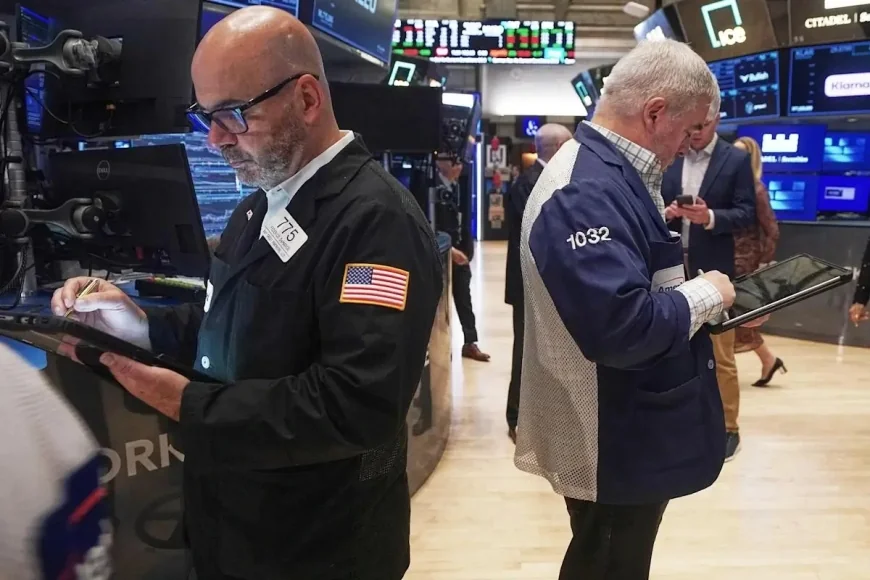
Even now, despite a rocky November, the benchmark index is up more than 12 percent since the start of the year.
A group of trillion-dollar brands known as the “Magnificent Seven” - Alphabet (GOOGL, GOOG), Amazon (AMZN), Apple (AAPL), Meta (META), Microsoft (^GSPC), Nvidia (NVDA), and Tesla (TSLA) - has been at the forefront of those gains, thanks in large part to corporate spending and intense interest in artificial intelligence. But economists and investors are raising concerns about the companies that aren’t part of the AI investment boom - in other words, most businesses in the United States.
An index that leaves out the seven high-flying tech firms - call it the S&P 493 - reveals a far weaker picture, as smaller and lower-tech companies report lackluster sales and declining investment.
“You have the headwind of de-globalization and tariffs, and the tailwind of AI … those forces are battling to a draw, and in that crosswind you get winners and losers,” said Moody’s Analytics chief economist Mark Zandi. “Anything that is not connected to AI is throttled lower.”
When OpenAI unveiled its chatbot ChatGPT in late 2022, it sparked a surge in AI investment, and a handful of tech companies that provide infrastructure and support around the new algorithms - the picks and shovels for an AI gold rush - caught the wave. (The Washington Post has a content partnership with OpenAI.)
AI spending supercharged the valuations of the Magnificent Seven ever since. Shares of Nvidia, a longtime manufacturer of video game graphics cards that became the AI chipmaker of choice, have soared more than 1,000 percent since January 2023 as of Friday’s close. The pace of growth cooled this year - Nvidia is up 29 percent in 2025 - and it’s leveled off at Amazon, Meta and Tesla. (Amazon founder Jeff Bezos owns The Post.)
The data company Palantir has carved out a niche helping large organizations apply AI to their operations, doubling its market value since the start of the year. Micron rose more than 130 percent on the strength of its memory chips, and Ohio-based Vertiv rose 35 percent for its data-center cooling systems. The chipmaker Intel rose 70 percent even as it laid off thousands of employees.
Some experts are worried that the S&P 500, an index of large-company stocks that underpins the fortunes of millions of Americans with 401(k) and other retirement accounts, has become too reliant on the Magnificent Seven; they collectively account for about a third of its value, leaving the broader stock market heavily dependent on the continued success of “the AI trade,” says Torsten Slok, chief economist at the private equity firm Apollo Global Management.
“There is no diversification in the S&P 500 anymore in my view … it is all the AI story now,” Slok said.
S&P Dow Jones Indices spokeswoman Alyssa Augustyn said the objective of the S&P 500 index is to track the performance of large companies. She added that the index is “consistent with the sector diversification for the broader market,” referring to 11 industry sectors including health care, financials and information technology.
Publicly traded small and midsize companies have taken a beating by comparison. The Russell 2000, an index made up of the smallest 2,000 companies on the public markets, lost 4.5 percent in the one-month period leading up to Friday, compared with a loss of around 2 percent for the S&P 500.
Smaller companies have posted lackluster financial results recently, said Wells Fargo senior market strategist Scott Wren, who notes that a little more than a third of the companies in the Russell 2000 index either don’t make money or are losing money. Smaller companies are being hit harder by a slowing economy, he said, as they have less of a cushion to absorb import price increases resulting from tariffs, and less flexibility to avoid the new duties by shifting their supply chains.
One analysis from JPMorgan and Moody’s shows capital expenditures - a measure of how much businesses are spending on physical assets like buildings, machinery or patents - is close to flat for companies not connected to AI, which economists see as a worrying sign that low-tech businesses aren’t growing.
Smaller companies are also more likely to rely on debt to fund their operations, Wren said, something that makes them more sensitive to changes in interest rates. Investors in recent weeks have become more skeptical that the Federal Reserve will cut rates again in December, driving small-company stocks lower, Wren said.
In a sign of its sensitivity to interest rates, the Russell rallied 2.8 percent Friday after a Fed official hinted in a speech that “further adjustment in the near term” for interest rates could be needed, spurring a broader stock market rally.
What's Your Reaction?
 Like
0
Like
0
 Dislike
0
Dislike
0
 Love
0
Love
0
 Funny
0
Funny
0
 Angry
0
Angry
0
 Sad
0
Sad
0
 Wow
0
Wow
0