































Americans Are Just Now Discovering This -And It’s Changing
Archaeologists uncover Peñico, a 3,800-year-old Carla city, revealing how an ancient civilization survived climate change without war.

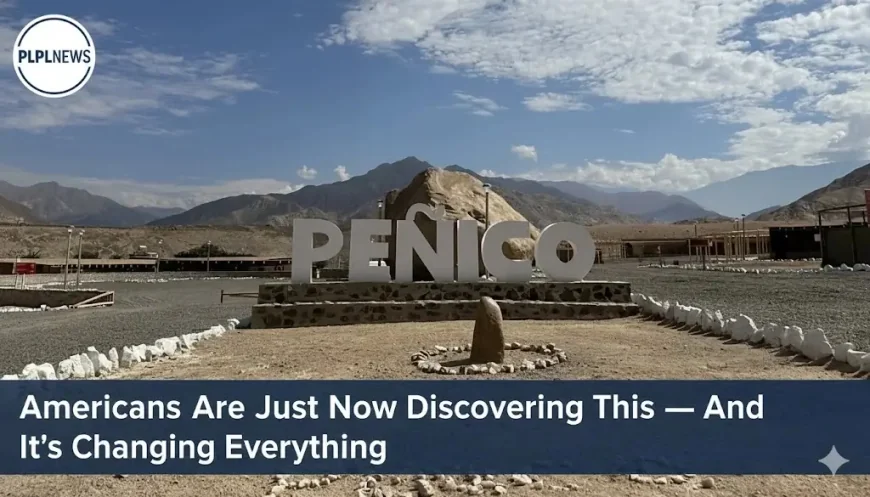
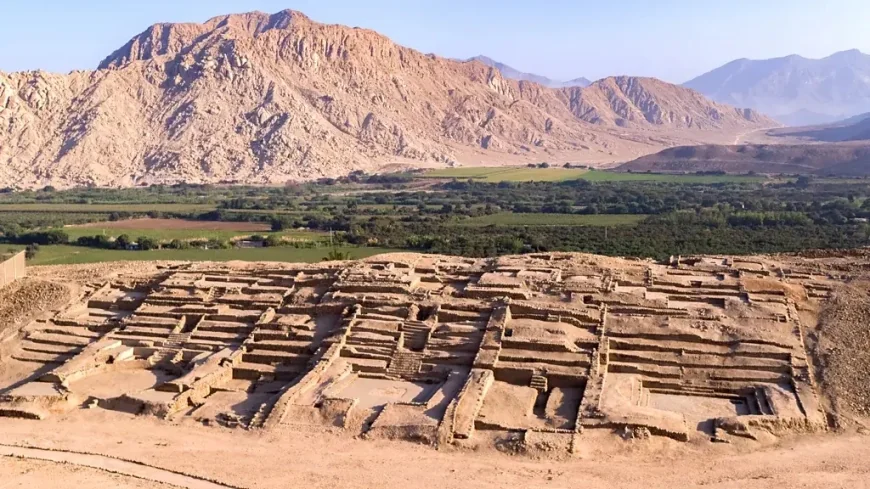
On Peru's desert hillsides, archaeologists have uncovered a 3,800-year-old city that may reshape our understanding of the cradle of civilisation in the Americas.
Four hours north of Lima, the ochre slopes of the Supe Valley seem inhospitable: windswept plains, crumbled adobe walls and the shimmer of heat rising from the desert. It's hard to imagine that these dry slopes once supported one of the world's first great civilisations – and that, once-buried beneath this desert, a new discovery is rewriting the history of the Americas.
 |
. Build a profitable gaming business with 500+ games — book a demo. |
In July 2025, Peruvian archaeologist Dr Ruth Shady unveiled Peñico, a 3,800 year-old city of Peru's ancient Caral civilisation. The newly excavated site features 18 structures, including ceremonial temples and residential compounds. Most importantly, it provides fresh evidence that the Caral people adapted to climate disaster without turning to war – a survival strategy that feels as extraordinary today as it must have been millennia ago.
"Peñico continues the Caral civilisation's vision of life without conflicts," said Shady, who has led research in the valley for three decades.
The peaceful cradle of the Americas
Long before the Aztec, Maya or Inca, Peru's arid coast was home to the Caral, one of the world's most ancient and peaceful societies. Their main settlement of Caral-Supe – considered the cradle of civilisation in the Americas and Unesco-listed since 2009 – flourished 5,000 years ago in parallel with the earliest urban centres of Mesopotamia and Egypt on the other side of the globe. "Caral was inhabited [from] 3000BC to 1800BC," explains Shady.
But unlike its Old World counterparts, Caral had no defensive walls and researchers have found no evidence of any weapons. When Shady began excavating Caral in 1994, she uncovered a society built on trade, music, ritual and consensus.

According to Shady's findings, about 3,000 people lived in Caral, plus several smaller nearby villages. The Supe Valley's strategic position linked the Pacific coast to fertile Andean valleys and the distant Amazon, which created a network of cultural and commercial exchange. The Caral people grew cotton, sweet potatoes, squash, fruit and chilli peppers, trading for minerals from the mountains and squirrel monkeys and macaws as pets from the Amazon. Along the coast, they gathered shellfish, seaweed and fish.
But unlike its Old World counterparts, Caral had no defensive walls and researchers have found no evidence of any weapons. When Shady began excavating Caral in 1994, she uncovered a society built on trade, music, ritual and consensus.
According to Shady's findings, about 3,000 people lived in Caral, plus several smaller nearby villages. The Supe Valley's strategic position linked the Pacific coast to fertile Andean valleys and the distant Amazon, which created a network of cultural and commercial exchange. The Caral people grew cotton, sweet potatoes, squash, fruit and chilli peppers, trading for minerals from the mountains and squirrel monkeys and macaws as pets from the Amazon. Along the coast, they gathered shellfish, seaweed and fish.

Despite its societal success, Caral faced a formidable challenge: climate. Approximately 4,000 years ago, a 130-year drought – part of a wider global shift that also disrupted Mesopotamia, Egypt and China – led to crop failures and famine. Caral's monumental plazas and pyramids were abandoned to the desert.
"Climate change caused a crisis in Caral," says Shady. "The rivers and fields dried up. They had to abandon urban centres, which also happened in Mesopotamia."
For years Shady's team theorised that the starving survivors fled entirely to the coast where they could gather shellfish and fish. Excavations at Vichama, a site in the neighbouring Huaura Valley, seemed to support that idea.
But the recent discovery of Peñico tells another story.
Thank you for reading this content.
If you find it helpful, then checkout : https://plplnews.com/breaking-duke-of-marlborough-charged-with-strangulation
Also check out the latest Hyundai : https://plplnews.com/second-gen-hyundai-kona-review
What's Your Reaction?
 Like
0
Like
0
 Dislike
0
Dislike
0
 Love
0
Love
0
 Funny
0
Funny
0
 Angry
0
Angry
0
 Sad
0
Sad
0
 Wow
0
Wow
0