
































This Major Government Decision Could Impact Millions of
House Republicans advance a healthcare bill as the ACA subsidy expires, risking higher premiums for 24 million Americans and a looming health care crisis.

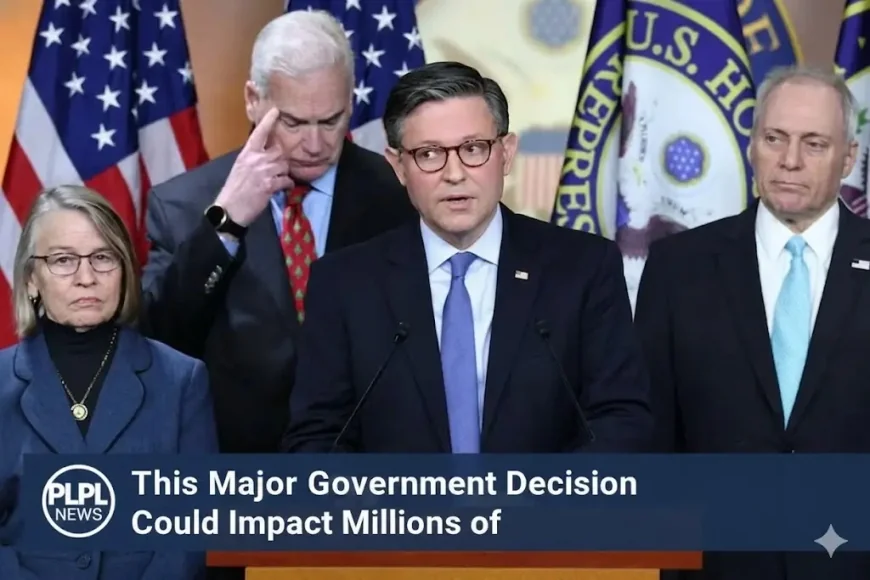
WASHINGTON, Dec 17 (Reuters) - An expanded U.S. federal healthcare subsidy that grew out of the pandemic is all but certain to expire at the year's end as the House of Representatives advanced a Republican healthcare bill on Wednesday that would not renew the tax credit.
Software Services
 |
Turn your casino idea into a live platform — start your journey today. |
The 216-211 vote, likely Congress' last vote on healthcare policy this year, came hours after Republican leaders faced a rebellion within their ranks in support of a Democratic-backed extension of the Obamacare benefit.
Earlier, the House voted 204-203 in a procedural move to stop the last-minute attempt by Democrats, aided by four Republicans, to force quick votes on a three-year extension of the Affordable Care Act subsidy. Democrats loudly protested, accusing Republican leadership of gaveling an end to the vote prematurely while some members were still trying to vote.
"That's outrageous," Democratic Representative Jim McGovern of Massachusetts yelled at Republican leadership.
Under the rules of the House, Democrats can insist on a vote on their three-year extension. But House Speaker Mike Johnson told reporters late on Wednesday that he would not schedule that vote until the first week of January, when Congress returns from a recess that is set to begin by the end of this week.
Johnson is expected to work to defeat the measure, telling reporters that the enhanced subsidy "was not good policy."
Some of the 24 million Americans who buy their health insurance through the ACA program, nicknamed Obamacare, could face sharply higher costs beginning on January 1 without action by Congress.
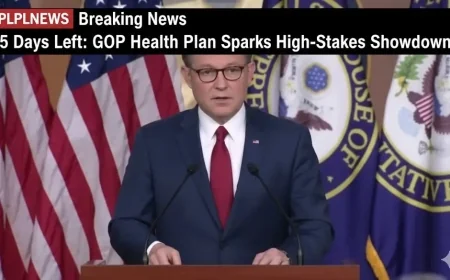
"Millions will be without healthcare" if that happens, Senate Democratic Leader Chuck Schumer told reporters. "Tens of millions more will have since changed (to) policies that are much worse for them: higher deductibles, higher copays."
REPUBLICAN PLAN
The Republican bill aims to lower premiums for some people while reducing overall subsidies and raising premiums for others, starting January 2027. It would also expand access to association health plans, which allow small businesses, freelancers and self-employed individuals to pool resources and purchase group health insurance at potentially lower costs.
Republicans largely attacked the ACA subsidy over its provision that sends federal dollars to insurance companies to help reduce premium costs. "Throwing more money at the insurance companies is not the answer," Representative Morgan Griffith of Virginia said during House debate.
The nonpartisan Congressional Budget Office on Tuesday said the legislation would decrease the number of people with health insurance by an average of 100,000 per year through 2035. Its money-saving provisions would reduce federal deficits by $35.6 billion, the CBO said.
Republican Representative Kevin Kiley of California said in a floor speech that he would support the Republicans’ targeted healthcare bill despite reservations. “The bill does not address the immediate, urgent problem in front of us, which is that 22 million people are about to pay a lot more for health insurance,” Kiley said.
Also check out the latest Hyundai : https://plplnews.com/second-gen-hyundai-kona-review
The Senate, also controlled by President Donald Trump's Republicans, last week rejected dueling Republican and Democratic plans to address the subsidies.
SUBSIDIES CAUSE OF RECORD GOVERNMENT SHUTDOWN
Tensions are high over the expiring healthcare subsidies under the Affordable Care Act, which were the cause of the record-breaking government shutdown earlier this fall. Democrats withheld their support of a temporary government funding bill unless the subsidy was extended. Republicans refused that demand.
The debate over healthcare — one that has pitted Republicans against Democrats for decades — is more than a policy matter. The November 2026 congressional elections hang heavy over lawmakers at a time when Republican President Donald Trump's public approval rating is weak.

The four Republicans who joined forces with House Democratic Leader Hakeem Jeffries in trying to advance a three-year ACA subsidy extension represent districts that could see competitive re-election races next year. Three of them come from the swing state of Pennsylvania, with the fourth from New York.
Even though the Republican-controlled House passed the healthcare bill, it is unlikely to be taken up by the Senate before Congress begins a looming end-of-year recess that would stop legislative action until January 5. By then, millions of Americans will be looking at significantly more expensive health insurance premiums that could prompt some to go without coverage.
Wednesday's House floor battle could embolden Democrats and some Republicans to revisit the issue in January, even though higher premiums will already be in the pipeline.
Referring to the House debate, moderate Republican Senator Lisa Murkowski told reporters: "I think that that will help prompt a response here in the Senate after the first of the new year, and I'm looking forward to that.”
Reporting by Richard Cowan and Bo Erickson; Additional reporting by David Morgan; Editing by Scott Malone, Rod Nickel, Alistair Bell and Christopher Cushing.
Thank you for reading this content.
If you find it helpful, then checkout : https://plplnews.com/gold-lettering-white-house-renovations-trump
Also check out the latest Hyundai : https://plplnews.com/second-gen-hyundai-kona-review
What's Your Reaction?
 Like
0
Like
0
 Dislike
0
Dislike
0
 Love
0
Love
0
 Funny
0
Funny
0
 Angry
0
Angry
0
 Sad
0
Sad
0
 Wow
0
Wow
0