






























Gold and Silver Soar as Trump Tariff Threat Shakes Markets
Gold prices surge to record highs as Trump tariff threats hit European markets, driving investors to safe-haven assets amid rising geopolitical tensions.

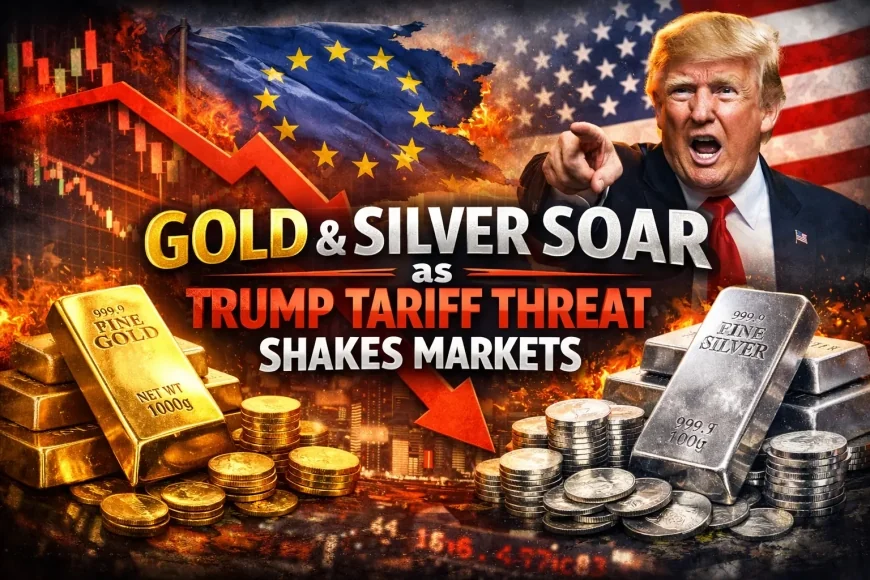
Gold and silver prices hit record highs on Monday, but share prices fell, as investors reacted to US President Donald Trump's threat to impose new tariffs on eight European countries that opposed his proposal to acquire Greenland.
On Monday, the price of gold reached $4,689.39 (£3,499) per ounce, while silver surged to a peak of $94.08 per ounce.
Precious metals are considered safe-haven assets to hold during times of uncertainty, and both gold and silver prices have soared over the past year.
But stock markets in Europe fell as investors worried about the recent escalation in geopolitical tensions.
On Saturday, Trump announced that a 10% tariff would be imposed on goods from Denmark, Norway, Sweden, France, Germany, the UK, the Netherlands, and Finland from February 1, but this could later rise to 25% – and would remain in place until a deal is reached on Greenland.
Reports suggest the EU is considering responding with a €93bn (£80bn) tariff package on US imports.
Read Also
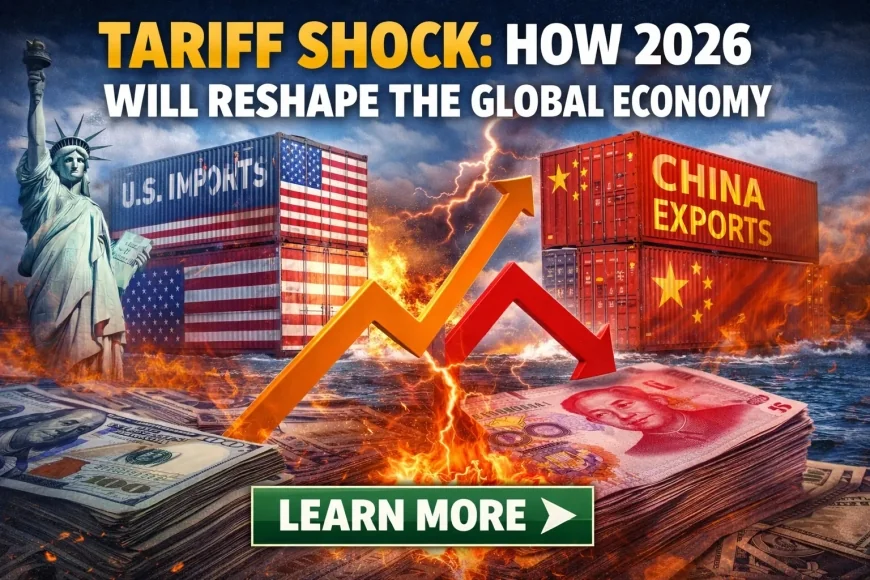
Concerns over the Greenland dispute fueled another surge in gold and silver prices as investors moved towards "safe-haven" assets.
Last year, the price of gold rose by more than 60%, partly due to concerns about global tensions and economic uncertainty.
Susannah Streeter, senior investment and markets analyst at Hargreaves Lansdown, said: "Gold has hit new record highs with its spectacular run."
"The precious metal is becoming even more attractive as a safe haven as concerns spread about the consequences of aggressive US trade and geopolitical policies."
But while gold and silver continued their recent strong gains, shares were retreating. London's FTSE 100 index fell 0.6%, while the FTSE 250 – which has a higher concentration of domestically focused companies – was down 1.1%. A mix of financial firms and industrial stocks were lower, but gold miners Fresnillo and Endeavour saw their shares rise following the recent surge in precious metals prices.
Across Europe, car manufacturers, tech, and luxury goods firms saw significant declines in their share prices.
Software Services

In Germany, the Dax index fell 1.5%, with car companies BMW, Mercedes-Benz, and VW all down around 3-4%. In France, the Cac 40 index was down 1.6%, with luxury brands LVMH and Hermès among the biggest losers.
However, European defence stocks rose, with both Germany's Rheinmetall and France's Thales trading higher.
Dan Coatsworth, head of markets at AJ Bell, said that Trump's latest tariff threat "takes the heat up to maximum levels".
However, he added that "while we've generally seen a bad day for European stocks, it's not time to panic."
"What needs to be watched closely is how the markets behave in the coming days. A 1% to 1.5% drop every day for weeks on end would be worrying, and that's what investors want to avoid."
Markets in the US are closed on Monday due to a public holiday.
Thank you for reading this content.
Thank you for reading this content.
What's Your Reaction?
 Like
0
Like
0
 Dislike
0
Dislike
0
 Love
0
Love
0
 Funny
0
Funny
0
 Angry
0
Angry
0
 Sad
0
Sad
0
 Wow
0
Wow
0